PEACEBUILDING THROUGH RESTORATIVE JUSTICE
International Restorative Justice Week | November 15-21, 2026
This November, International Restorative Justice Week turns to peacebuilding, at a time when peace worldwide is being disrupted by new, ongoing and escalating wars and inter-community and inter-state conflicts, from Ukraine and Gaza to Syria, Iran, Israel, Lebanon and Afghanistan. Thousands of lives continue to be lost, including those of women and children. Too often, the response to conflict is more of the same: more weapons, more violence, more division, while the people most affected are left without a voice in what happens next.
Restorative justice offers a different starting point. When harm happens, moving forward is not always simple. People need to be heard. Trust takes time to rebuild. And those most affected should have a say in what comes next. Rather than asking only who is to blame, restorative justice asks what happened, who was harmed, and what it will take to repair it. This is not a quick fix, and it does not promise reconciliation or guarantee peace. But it offers a way of working through harm together, through dialogue, accountability and the inclusion of those affected, rather than around it.
That is why we have chosen peacebuilding as this year’s theme: to bring people together to explore what restorative justice can offer when relationships have been affected by harm, whether between individuals, communities or nations, and to keep building the patient, long term work that peace requires.
Join us from 15 to 21 November for events, stories and conversations exploring how restorative justice can support peacebuilding.
Peacebuilding is not only about ending conflict. It is also about what happens after harm, and who gets to shape what comes next.
RJ4All has been engaged in this work for years. Through our Enhance project, delivered in partnership with NGOs and educators across Cyprus, Italy, North Macedonia, Jordan, Morocco and Egypt, we work to tackle gender inequality and build community cohesion in societies affected by conflict and division. In Bahrain, we have worked with local law enforcement to bring restorative justice into their practice. And in Cyprus last year, we convened the 4th International Symposium on Restorative Justice, “Inter-community and Inter-State Conflict: Peacebuilding and Reconciliation,” bringing together practitioners and scholars to share stories of trauma from past conflicts and global best practice in community led peacebuilding.
Join Us for International Restorative Justice Week 2026
We invite you to explore the week’s events and join us on this journey of discovery and reflection. From 15-21 November, practitioners, researchers, young people, and communities will come together to explore power of evidence-based restorative justice in promoting peacebuilding, addressing power abuse and resolving conflict.
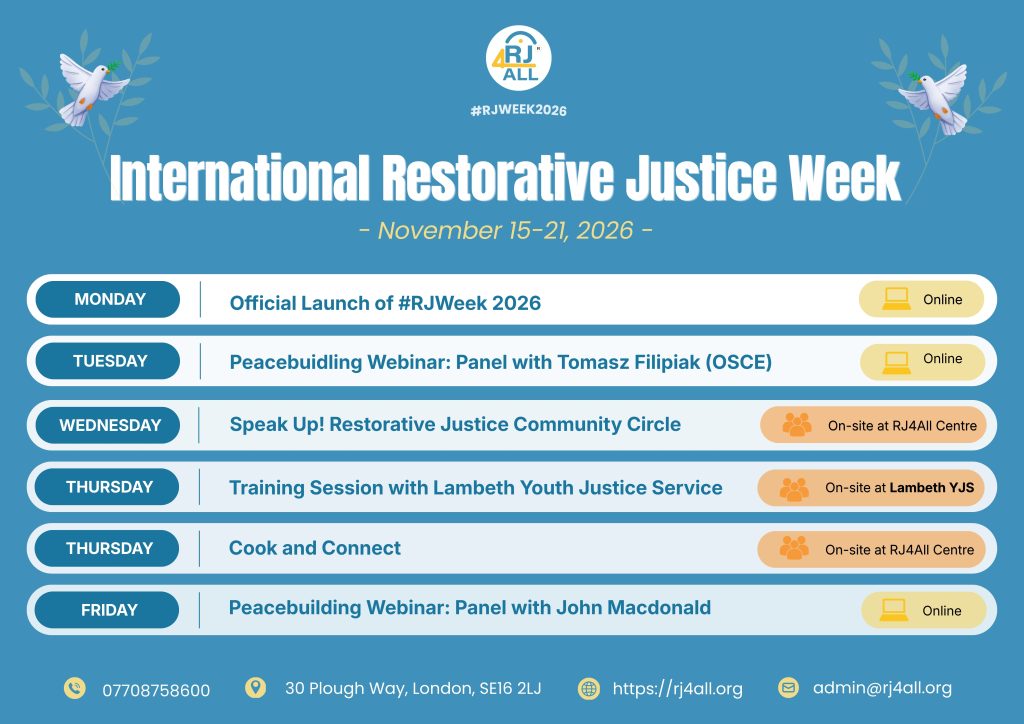
Please see the event calendar below for the full programme and learn how to get involved. Whether you are a practitioner seeking training, a young person looking for support, or simply curious about what restorative justice can achieve, there is something here for you.
Support Our Restorative Justice Week Crowdfunder Campaign
Events Calendar
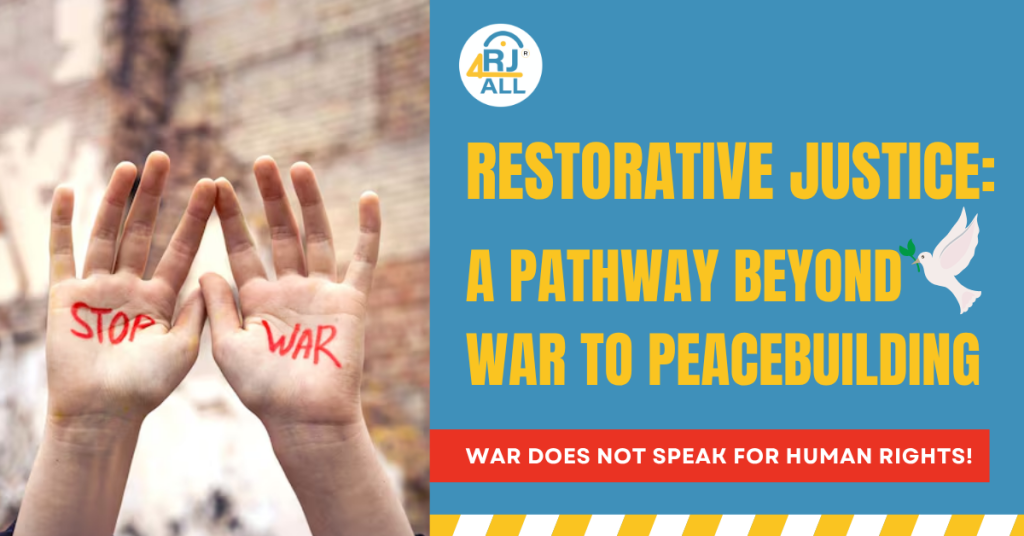
Peace worldwide is being tested by escalating conflict, from the Middle East and Iran to Ukraine, with civilians, including children, bearing the heaviest cost. Wars eventually end, but what follows is rarely quick or simple. Peacebuilding takes years of dialogue, with progress and setbacks along the way, to rebuild trust and create safe conditions for genuine conversation. It also depends on the participation of both states and their people, including the most marginalised communities, none of whom should be left out.
From building restorative justice capacity in the Middle East to supporting community cohesion through projects like Enhance, and convening international symposia on peacebuilding and reconciliation, RJ4All has long championed restorative justice as a patient, evidence based path towards repair. Reconciliation and peace remain possible, but only when the real consequences of harm are recognised and genuinely addressed.
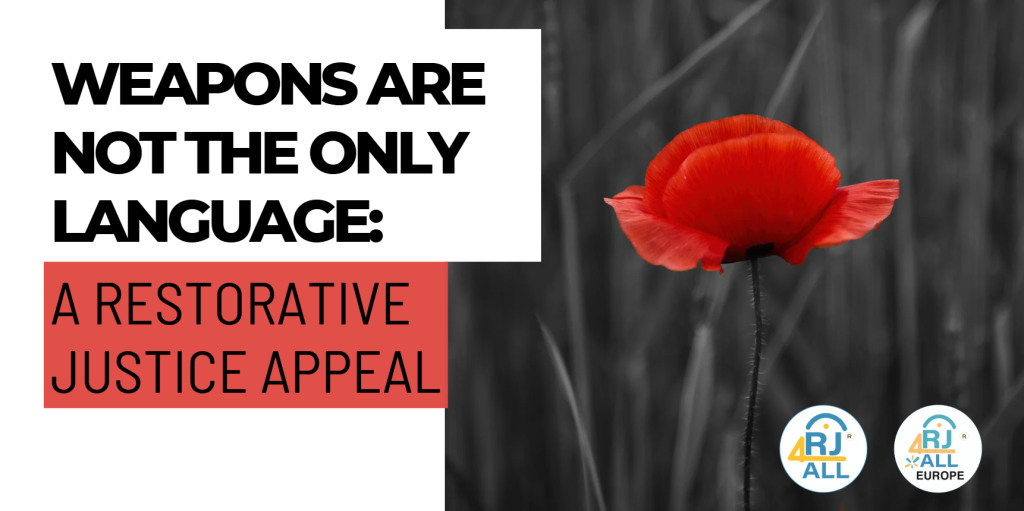
In March 2026, war between Iran, Israel and the United States claimed hundreds of lives within days, including children killed in an airstrike on a school in Iran, families sheltering underground in Israel, and aid halted in Gaza. Professor Theo Gavrielides, RJ4All’s Founder and Director, argued that those least responsible for conflict often bear its greatest cost, and that the persistent driver behind violence is power abuse, not the causes it claims. He pointed to restorative justice, already rooted in Middle Eastern and Islamic traditions of pardon and reconciliation, as an alternative to dialogue replaced by threats. His appeal was simple: look at the people actually affected, not strategic interests, and choose the patient, human work of understanding over destruction, work that will never make headlines, but is the only work that has ever truly built peace.
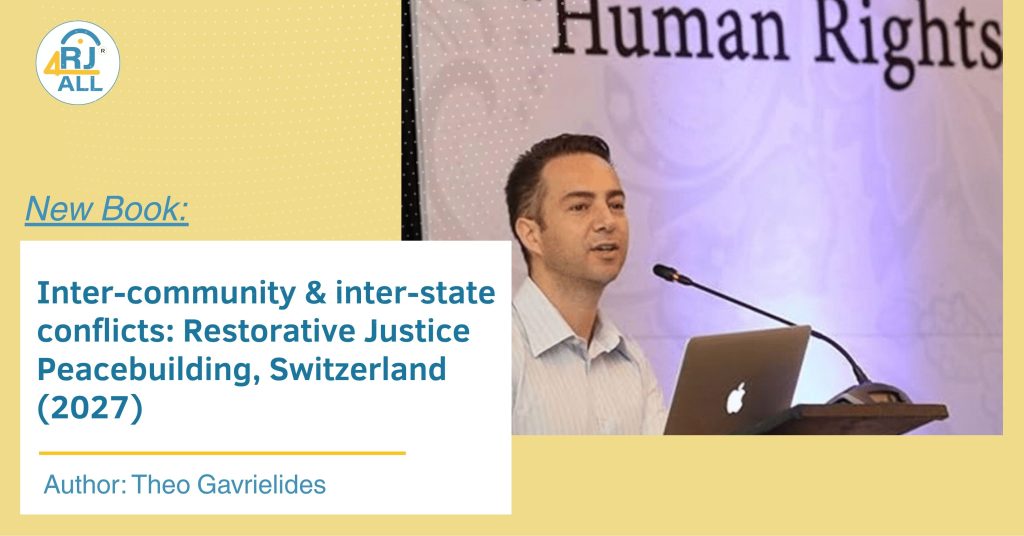
New publication offers a new vision for peacebuilding grounded in restorative justice, responding to ongoing inter-community and intra-state conflicts, the legacies of colonisation, and the lasting trauma experienced by affected communities. Bringing together international researchers, practitioners and community leaders, it explores approaches centred on power-sharing, dignity, equality and participation in decision-making rather than traditional punitive and top-down models.
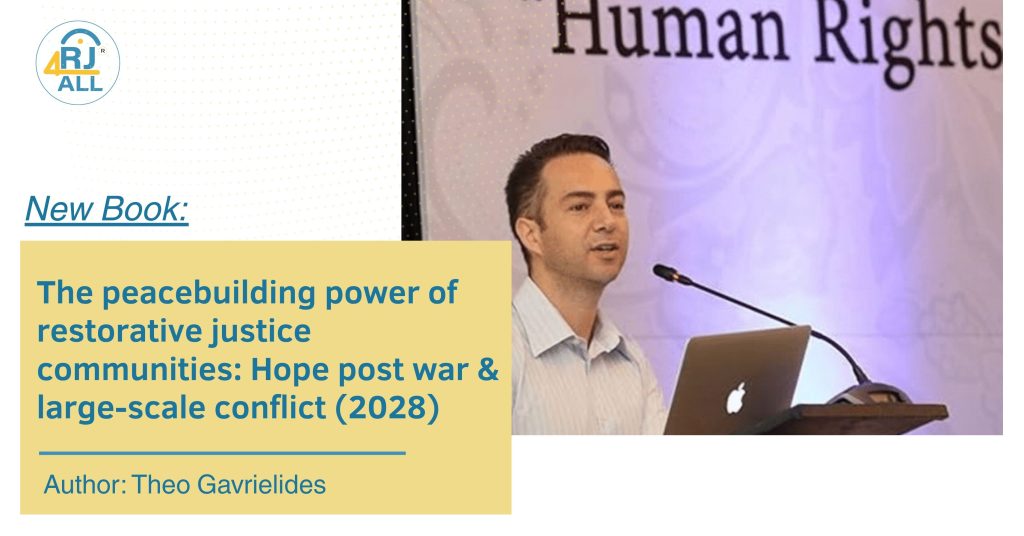
This book explores how restorative justice and community-led approaches can contribute to peacebuilding in contexts of war, inter-community conflict and abuses of power. Bringing together interdisciplinary perspectives and case studies from across the world, the book challenges traditional state-led peacebuilding models and highlights the role of affected communities in repairing harm, rebuilding relationships and promoting dignity, equality and shared decision-making.
Professor John Braithwaite, one of the world’s most influential criminologists and Restorative Justice pioneers, joins Prof Theo Gavrielides, RJ4All Founder & Director, in this special conversation. This 49-minute webinar dives into the politics of hope, the abuse of power, and how restorative approaches can heal even the most entrenched interstate and inter-community conflicts.
From the war in Ukraine and the Israeli-Palestinian conflict to the division in Cyprus and the historical trauma of Indigenous peoples in Australia, Professor Braithwaite offers powerful examples of how deep listening, relational dialogue, and voluntary participation can bring about justice and reconciliation. He draws on stories from global diplomacy, like the Camp David Accords, and his own work with corporate accountability to highlight the transformative potential of Restorative Justice at all levels.
The discussion also explores:
– How intergenerational trauma perpetuates cycles of harm
– When mediation and dialogue work and when they fail
– How community-led initiatives and inclusive participation can drive sustainable peace
– Practical strategies for addressing power imbalances in restorative processes
Annual Restorative Justice Blog
Annual Restorative Justice Week Webinars
RJ Webinar with John McDonald
RJ Webinar with Mark Jones
RJ Webinar with Tomasz Filipiak
We are expanding in Europe!
Empowering Communities through Restorative Justice
RJ4All Europe is the sister organisation of the Restorative Justice for All (RJ4All) International Institute, founded and directed by Professor Theo Gavrielides. Based in Cyprus and managed by Dr Eric Anton Heuser, RJ4All Europe extends RJ4All’s mission of promoting fairness, dignity and equality through the values and practices of restorative justice.
We are expanding our work in Europe at a time when peace across the region and beyond is being tested by new and ongoing conflicts. Against this backdrop, RJ4All Europe continues to grow its role in peacebuilding, bringing restorative justice values of dignity, accountability and shared humanity into more communities and more partnerships each year.
Through RJ4All Europe, we have built partnerships across thirteen countries, delivering evidence-based programmes that address gender-based violence, hate crime, discrimination, youth justice and women’s empowerment. In 2025 alone, we strengthened over forty-five strategic partnerships, contributed to three major international initiatives spanning Europe, Africa and the MENA region, convened twenty world peace leaders in Cyprus, and welcomed twenty restorative justice experts into our global leadership structures.
Our work in Europe includes the Erasmus+ funded ENHANCE project, which tackles gender inequality and discrimination in partnership with organisations across Cyprus, Italy, North Macedonia, Jordan, Morocco and Egypt, and Restoring Respect in Sports (RRiS), which works with partners in Greece, Bulgaria, Cyprus and Türkiye to address hate and intolerance in sport through non-punitive, restorative approaches. Through Building Bridges, we also connect young people across Europe and Africa to build intercultural understanding and essential skills through restorative justice values.
These are not models imposed on communities from outside, but collaborative partnerships where learning flows in all directions.

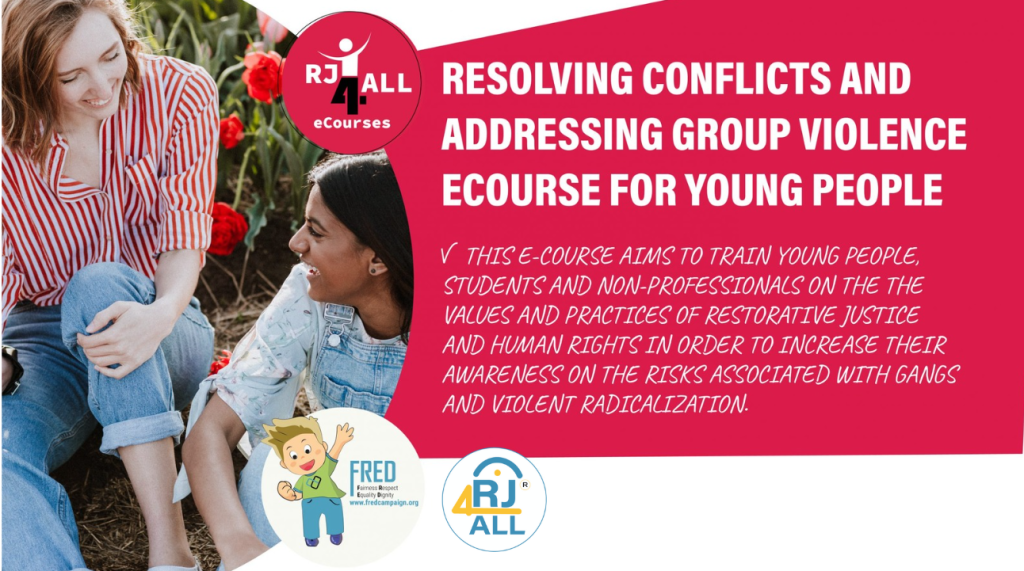
Restorative Justice Ecourses - Online Education at your fingertips

RJ4All Education is a Vocational, Educational and Training provider that follows The European Credit System for Vocational Education and Training (ECVET). This is a technical framework that has been introduced by the European Commission and which supports the transfer, recognition and accumulation of learning outcomes across Europe. ECVET provides a set of principles and tools that facilitate the process of learner recognition, with a view to achieving a qualification. Our e-courses are developed within the ECVET Framework. Through the use of learning outcomes, ECVET allows for improved design and enhanced quality assurance in the delivery of our e-courses.

The internet Journal of Restorative Justice
The Internet Journal of Restorative Justice (IJRJ®) is the leading, international peer-reviewed journal on restorative justice. It was established in 2012 to push the boundaries of criminal justice by adopting a unique, practical
approach to researching and investigating restorative justice.
It is indexed and ranked by Scopus, Kudos, The European Reference Index for the Humanities and the Social Sciences (ERIH PLUS) as well Criminal Justice Abstracts and EBSCO Information Services.
Submissions to the IJRJ® must follow the Editorial Guidelines, and can be made by email to ijrj@rj4allpublications.com at any given time. We aim to complete the review process within 4-6 weeks of receipt.
The Editor-in-Chief is Professor Theo Gavrielides.
The Journal is guided and scrutinised by its Editorial Board and the International Advisory Board. All submissions are first reviewed by the Editor-in-Chief, and if judged suitable for this publication, they are then blind-reviewed anonymously and separately by at least two external, expert reviewers.
The Internet Journal of Restorative Justice (Open Access) can be accessed online following the links below
The Internet Journal of Restorative Justice is published by RJ4All Publications, an independent publisher in social sciences, and the publishing arm of the non-profit NGO, Restorative Justice for All (RJ4All). As a non-profit, RJ4All is pleased to offer this Journal at a subsidised cost. Our current prices are for annual subscriptions (unlimited downloads):
Student: £35 | Individual: £75 | Non-profit organisations: £120 | Corporate: £200
Restorative Justice Series | Webinars

As part of RJ4All’s Youtube channel, we are pleased to offer this webinar series by Prof. Theo Gavrielides. Webinars are added on a continuous basis and cover themes such as what is restorative justice as well as its application within the criminal justice system, schools, the community and much more. Sign up to our channel to receive notifications for new webinars, which you are welcome to use for yourself or your teaching.
Restorative Justice Free Online Library


Implementing Restorative Justice for Hate Incidents and Hate Crimes: A Practical Guide
Publisher: Organisation for Security and Co-operation in Europe, with technical contributions from Dr Theo Gavrielides, RJ4All Founder and Director.
This guide shows how restorative justice can be used to address hate incidents and hate crimes.
It aims to help practitioners navigate the complexities of restorative justice in hate crime and hate incident cases, while addressing the limitations and risks of such practices. It is a resource for anyone involved in supporting victims of hate crime to ensure that restorative justice is a transformative tool for healing, empowerment and social cohesion.
Join RJ4All International Restorative Justice Pledge
We believe that through the restorative justice values of power-sharing, equality, dignity, respect and involvement in decision-making, we can achieve better justice for all. We also believe that power abuse is one of the most persistent drivers of inequality and community tensions, and that Restorative Justice can offer the methodology and ethos to rebalance power.
That is why we introduced the International Restorative Justice Pledge, inviting individuals and organisations around the world to join our global movement and put these values into practice.
By signing the Pledge, you commit to respecting human dignity, promoting peaceful ways to respond to conflict, supporting Restorative Justice where appropriate and voluntarily selected, and recognising harm as something that affects relationships as well as individuals.
The Pledge is free and open to everyone.
Sign the International Restorative Justice Pledge and join our global movement.